|
The programs of the Kistarcsai Kulturális Egyesület( the Cultural Organisation Kistarcsa) of aim first and foremost to lend variety to the life of the community, but European cooperation is also in its profile. We often accept invitations to abroad and sometimes we host guests from other countries.
Since the KIKE is well-known throughout Europe, we receive many invitations to participate in projects. We select in them – taking in consideration many things- and if the planned topic and venue are interesting for us, we make articles of agreement, which is a prerequisite for application. The topics are of a wide range – folk traditions, environmental protection, human trafficking, labour market, immigration…- but there is always enough time for preparation. It is an important factor in choosing the venue that it should be relatively easy to arrive there – for example, it takes days to get to the far-off cities of Turkey. From the forty-fifty projects concerning us circa ten can be realised because this amount can be sponsored. Although we cannot use every opportunity, we try to participate in as many programs as possible.
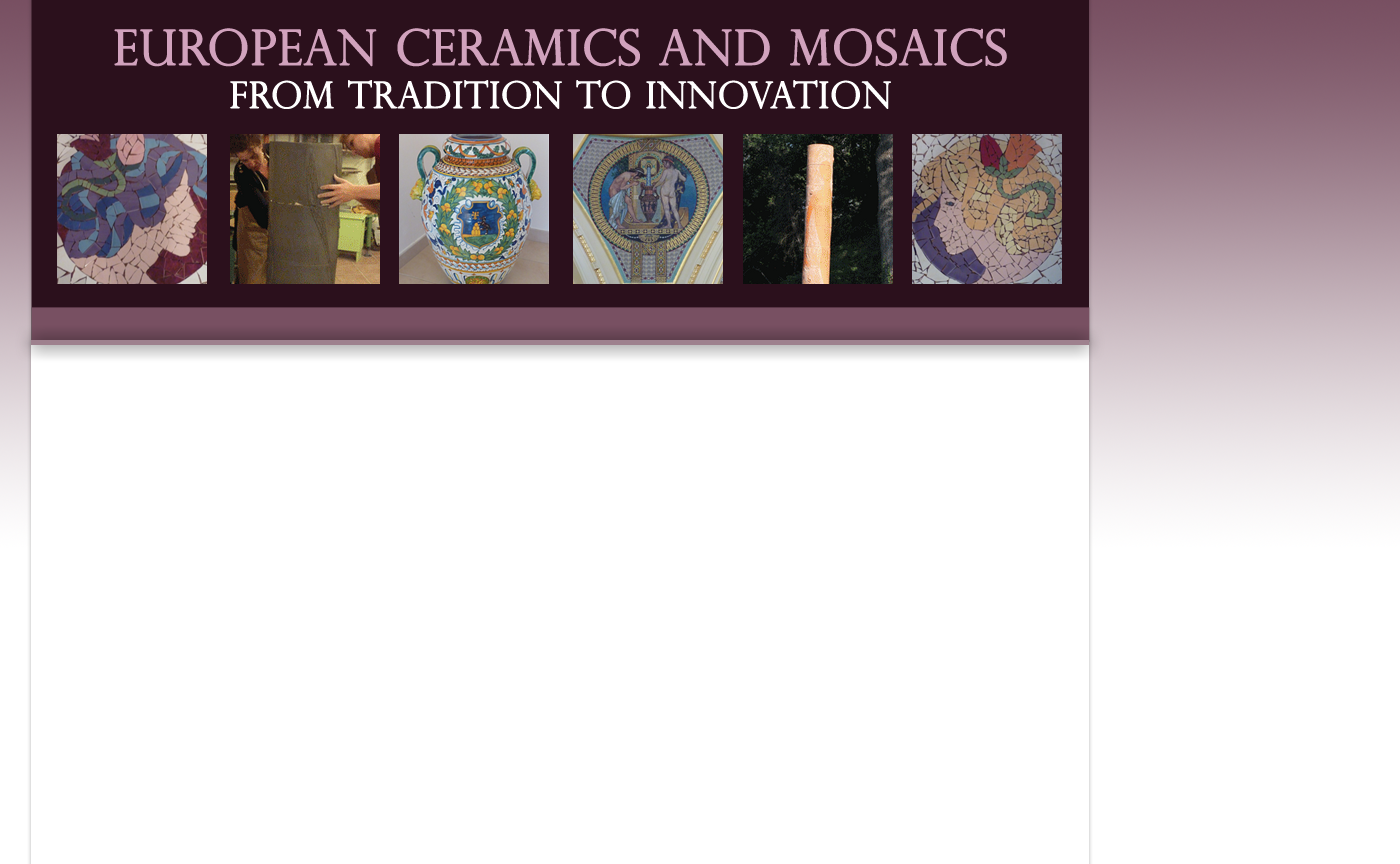
The topic offered by a Greek organisation which contacted us in 2008 was not a usual one. They wished to apply for a Ceramics and mosaic making project for the European Union, in the confines of the Grundtvig program and more specifically, the learning relations tender. (Nikolai Grundvig 1783-1872 Danish evangelist bishop, the ideological father of the folk high school)
Our Greek partners live in the city of Giannitsa, which lies north from Thessaloniki. The ruins of the ancient Pella were found near this city in the 50es of the last century. Alexander, the Great grew up in Pella and when he was 19 he set out for his conquering journey never to return . The city was destroyed by an earthquake and the surviving inhabitants moved away from this sad territory.
Archaeologists had been looking for the centre of the Macedon Empire for a long time, but there work was hindered by the fact that the city which once was a port, now lies 35 km away from the shores of the Aegean-sea. It's discovery was due to a lucky accident; a piece of crockery was found during ploughing. Also, beautiful mosaics were found during the excavations and the ruins of an ancient business house the stocks of several ceramics shop were found; naturally, in a ruined state. After they had been restored, the most valuable findings can be seen in a modern museum.
The ancient pieces had a great effect on the locals, so in the nearest city, Giannitsa crockery and mosaic courses have been organised for years. These activities have become almost a cult, so in spite of the high participation fees, there are always enthusiasts who wish to join the courses organised by the local government. So, this was the organisation which found us via the Internet.
We were a bit surprised at first by the invitation to cooperation, since these crafts don't have such a tradition in our regions; but in the end we decided to participate.
After the establishing of contacts, we went to a preparatory visit in order to meet in person and gain a better understanding of the topic. Our first attempt was rejected but next year we gave it another go. Beside the Greeks and us, there were also French, Italian and Turkish partners.
In this kind of tender you have to prepare a project together and then everybody hands it in in their respective countries to the office dealing with projects such as these. Although the form of the proposals are inspected in every country, the judging itself is done by the country of the coordinator – Greece, in our case – according to a certain system of criteria. The jury gives a score which is compared with that of every partaking country and on the basis of these results, they decide whether the project gets support. Luckily, our Italian partner won as well, thus we had the minimally required three participants.
On the other hand, neither the Turkish, who are famous for their mosaics nor the French ceramics centre, which is well known in professional circles won the tender.
In order to gain as high score as possible, we tried to impress the jury of the tender by
showing them our wide spectrum of cooperation. We won and faced the fact that we have to bring it about, as well. As the basic task, we organised ceramics and mosaic courses for adult learners, which was a bit more difficult for us, than our experienced partners, but we managed to cope with it.
We gathered in Greece for the discussion of the plans and the division of the tasks. Here we had to give a presentation on Hungarian ceramics and mosaics. Although both the Greek and the Italian mosaics are world-famous, our art nouveaux masterpieces- especially the works of Róth Miksa – impressed our audience
Both of our partners expressed their unwavering will to have a meeting in January last year and despite the winter it was decided that it should take place in Hungary. Thus we welcomed 12 Greek and 6 Italian guests in the confines of a study trip. We showed them a lot of wonderful mosaics in churches, cemeteries, swimming pools, marriage halls and baths. We took them to ceramics workshops, museums and exhibitions. We visited the Terebess Centre in Kistarcsa, where they could see – amongst other things – a very rich ceramics collection. They were received by mayor at the town hall, then they had the opportunity to meet the potential learners our courses, to whom they gave a powerpoint presentation of their environment and activities. Our Mediterranean guests returned home with many experience, but life didn't stop after the visit. According to a scheduled program we had a telecommunication day in the second week of February. First we got in touch with our Italian friends who presented us some ceramics which were made by them with a special technique. The Greek participants were around 20-according to the picture projected to the wall of the town hall- the same number as us. In this part, first and foremost the teachers who exchanged ideas, but naturally the students could also profit from it. We are still in the preparatory phase, but it is more than probable that the courses will start in March.
Kereszti Ferenc
|