Freiherr von Rosen
Großkomtur
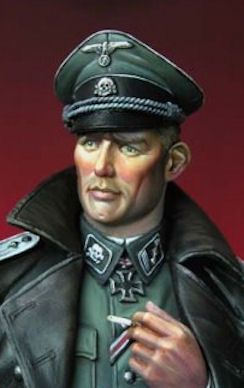
Csatlakozott: 2006.05.18., Csütörtök, 14:02
Hozzászólások: 2660
Tartózkodási hely: Auf dem Kreuzzug
|
 Elküldve: Pént. Nov. 04, 2011 10:04 am Hozzászólás témája: Elküldve: Pént. Nov. 04, 2011 10:04 am Hozzászólás témája: |
 |
|
Jean-Marie Dubois
Ambience
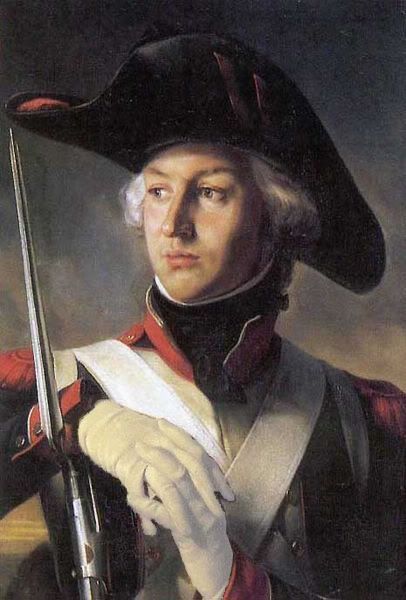
It was a pitch-black new moon that autumn night, in the 1764th year of our Lord, when a child was born in the Les Halles district of Paris. The house had little wealth, barely a roof, but the poor and simple parents joyfully lifted their newborn high, like a king and a queen would lift their heir.
The father, Sévère, a minor officer in King Louis's army, though originally hailing from La Rochelle at the Atlantic coast, was transferred to Paris for garrison duty. It is there he met his future wife, the seamstress Isabelle. Though they didn't have much money, at least they had peace, for the great Seven Years War had just ended, God be praised. An ideal time for founding a family.
As time went on, the child started to age, and soon arrived his sisters and brothers, one by one into a tough, busy, but ultimately happy existence. Their father, the old veteran often inflamed the heart of his firstborn with tales of distant lands, ship-giants, savage Indians and epic battles he lived through himself.
As the service time of Corporal Sévère Dubois came to an end, he was able to discharge at last, allowing them to leave increasingly-crowded Paris for the father's hometown. Jean-Marie's dreams about the sea finally manifested themselves; while Sévère returned to fishing, his son began learning the know-hows of seamanship with all his eagerness.
Given the circumstances of their time and age, they were happy; their needs were few, and they struggled diligently with the simple man's faith to put something on the table for eight. Fish is always bought, clothes too will forever need sewing, and soon enough, the children themselves could contribute, selling their self-made little tools, figurines and herbs gathered on the field.
Ambience
Jean-Marie was fourteen years old when France was at war again. The irony of fate decreed that the same colonial Brits against whom his father lost so much sweat and blood were now their friends and allies against the great, tyrannical neighbour in England. Though our man was still too young, he knew very well his time would come, and he awaited the day he could follow in the footsteps of his heroic father with enthusiastic patriotism.
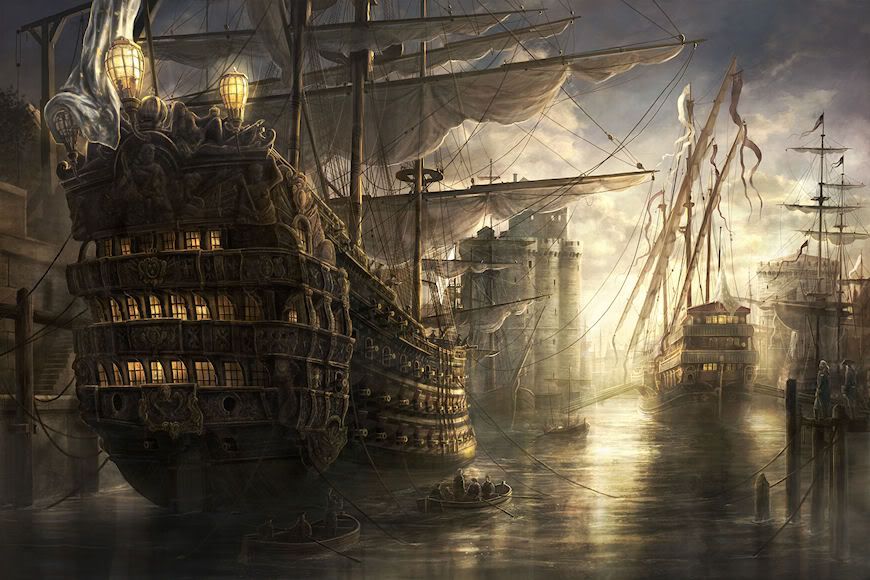
He consciously prepared, receiving sailor training on the colossal ships of the line in La Rochelle harbour. Simultaneously, he learned to shoot, fence, and swim like a dolphin. Finally, in the spring of 1780, as a mere sixteen years old, he sailed out westwards with the Expédition Particulière, the naval mission of the Count of Rochambeau, leaving his father in pride and his mother in tears.
The journey through the Atlantic was long and trying, but the boy took to the challenges eagerly, soon earning the favour of both the captain and his newfound comrades. When they reached port at Rhode Island in June, Marine Ensign Jean-Marie Dubois became part of the American Revolutionary War.
The events of the next few years passed swiftly in the gigantic American colonies. Sailing, ambushing, marching, more sailing, more marching, and a dozen scattered battles followed each other as the initial bands of colonial rebels around them gradually turned into a highly-driven, well-organized, victorious force. It is little wonder the ideals of these brave and heroic men eventually took root in the minds and hearts of Louis XVI's soldiers.
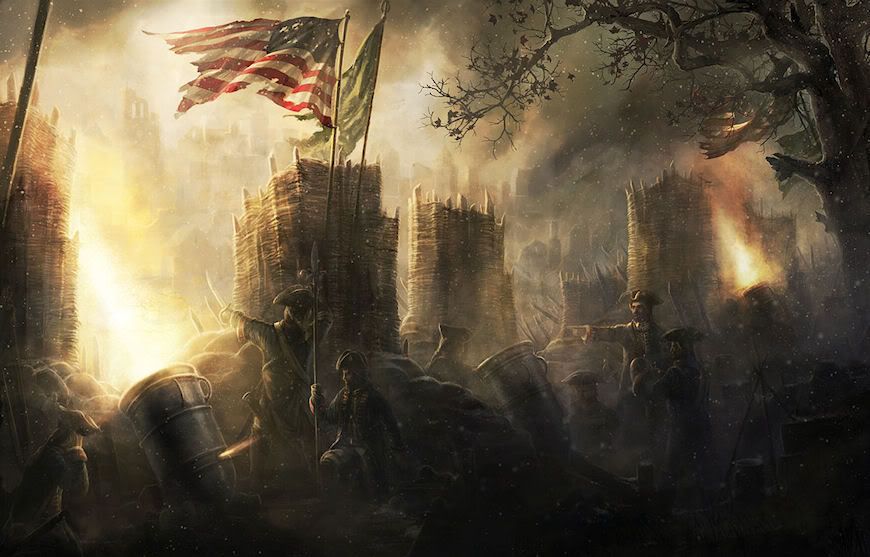
The Siege of Yorktown proved to be the final, conclusive battle, and Jean-Marie took his bloody share in it with musket and bayonet alike. The British sued for peace, and after spending a few more months in the newborn United States of America, the young, freshly-matured French marine finally set sail homewards.
Ambience
It was 1783, and having told the tales of his adventures sufficent times in local taverns, our hero now had to stand his own in civilian life. Though he was sporadically called in for garrison duty, he spent the vast majority of his time out at sea, on larger and larger vessels. Regardless of this, a strange emptiness began to take hold in the young man's soul, unexplainable to him at the time. When sailing out west, he simply longed for something more, he longed for adventure, not the mundane fishing nets of home, sweet home.
Little he knew he'd get much more than he bargained for...
Everything began six years after his return. Foreign wars, the king's political and financial carelessness and Enlightenment ideas turned the country into an impoverished, hungering, agitated beehive. Where else could it all have manifested better than in great Paris?
The people revolted, demanding not only bread, but rights and a constitution making them more than simple "subjects". When the Bastille was seized and the monarch forced into Paris, old Sévère decided he couldn't sit idle anymore. He wanted to be a part of history again. He took his family and moved back to Isabelle's relatives in The City of Light, dancing the dance of the Third Estate at the feet of barricades on the burning streets.
The Revolution began... and not even God himself could stop it now.

At first, Jean-Marie joined the National Guard alongside his father and his brother Gilbert. They all hoped the ensuing events would finally beat some sense into the king, and that soon enough, they could enjoy the benefits of a constitutional monarchy. Little they knew, however, just how deep the situation rankled while they tarried in distant La Rochelle, how radical and unstoppable the driving forces behind the revolution were, and how utterly unwilling Louis himself was to cave in to the demands of the "uncouth scum".
History kept flowing on before the eyes of the young Frenchman and he was less and less able to influence its happenings. As a National Guardsman, he was there at the founding of the Convention, the announcement of the Republic, the execution of Louis XVI. He fought bravely against invading external enemies, and as a reward, he was told his father is now an internal one.
The year was 1793, the place the Place des Vosges of Paris. The man was tall, gaunt, slightly limping on one leg, and despite being a Jacobine, he dressed like an aristocrat. But of course. They were the new nobility. It was visibly obvious he's been through a few streets already, an assumption reinforced by the sight of the chained people dragged on by his henchmen.
'François Louviere'.
François Louviere, Commissar of the Convention, arriving with the full authority of the Committee of Public Safety to arrest Lieutenant Sévère Dubois of the National Guard under reasonable suspicion of counter-revolutionary activities.
Jean-Marie never forgot that moment. That arrogant, openly gleeful face forever burned itself into his heart. His fist clenched in hatred as he watched his father immediately step outside, handing himself over to his executioners to spare his family. The boy standing in the window of the small, dark street reached for his musket... and then lowered it. They were too many; and the true victims of his vengeance would be his mother and his siblings.
Painfully long minutes followed, filled thickly with inner strife. He kept walking up and down in his room, listening to feminine cries of sorrow. Finally, he couldn't take it anymore. Driven by his consciousness, he said his farewells to his family, confident in the knowledge this is the last time he'll ever see them, and stormed out of the house, musket in hand, ignoring all desperate protests. The destination: Place de la Revolution, the blood-soaked square of the revolution, where the guillotine does its work.
The crowd was enormous that night, the number of the condemned high. Like a medieval witch-burning. Women and men, young and old alike, all came to enjoy this routine entertainment. In the general mass-hysteria, the appearance of yet another young man was practically ignorable. In fact, he was barely even noticed as he lifted his rifle to his shoulder, aiming towards the center. The gunshot, however, silenced the whole square.
The accursed Jacobine stood showing his back to Jean-Marie, barking commands to the guillotine's handler when the projectile shredded him. The world itself turned around with the young man in that fateful moment. Shoulder-hit...
He missed it...
Though the hated commissar fell to the ground, he was well-aware that shot wasn't going to kill him. And he had no time for more. Already, the crowd fell upon him to drag him under the guillotine. Throwing his empty gun into the revolutionary swarm, Jean-Marie turned around and began to run.
He knew he was running for his life.
And he knew he had no chance.
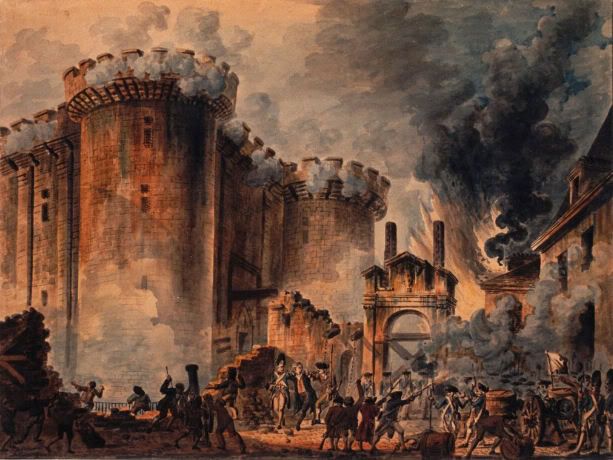
They say a man's life is replayed before his eyes in a powerful, adrenaline-filled flash as he's about to die. Something of that sort befell the young Frenchman running in vain from the sans-culottes. Memories, thought fragments came rushing, breaking into his mind; things he did and things he'd have loved to still do. But c'est la vie. The mob got closer and closer, and when he turned around that last corner...
He didn't quite know at first what exactly he should be more surprised at. The fact that some unseen force pushed him against a female bosom, or the complete confusion of his sans-culotte pursuers as they saw nobody and nothing. Soon, it was their turn to run screaming for their lives as that strange, incomprehensible darkness started flowing towards them to hungrily cover them and the light of their torches. It was then, that he first heard that sensual voice, barely louder than a whisper: "Bonsoir, mon capitaine."
To the no small luck of Jean-Marie, he did not wear his Guard uniform at the attempted murder, and neither did anyone in the crowd recognize him in those fleeting moments. However, his rescuer, who introduced herself as Charlotte Castillion, still adviced him to leave Paris in such a turbulent hour of history.
Who could have possibly resisted that soft contralto, those mesmerizing eyes? Everything that woman said seemed an obvious order to the ex-marine, who soon began to lead his family to Marseille in the south. She followed them all along, removing all obstacles at night, but falling asleep during the day, when her mortal entourage defended her with their lives. It only seemed natural for them to do so...
Little by little, some of the questions addressed to her were answered, as Charlotte didn't feel the need to maintain her veil of secrecy before her loyal servant forever. "Blood-drinking predator of the night" doesn't even sound that bad after a sufficent amount of consumed Vitae. Madame Castillion remained rather short-spoken about the supernatural world and its inhabitants, however. Whatever made her leave Paris in all that urgency certainly fell into that category. The one whose life she saved in the process swore his eternal gratitude, of course. But live today, take vengeance tomorrow.
Times were changing, and while the Dubois family settled on the Mediterranean coast, so did the country around them. The Jacobine reign of terror was toppled, much like the Directory afterwards. The Austrian, Prussian, Spanish, Italian and British military threats were all eliminated, one by one. A new name was rising in France, a name everybody would soon talk about; First Consul Napoleon Bonaparte. Creator of order, security and prosperity inside the borders, achiever of great victories outside.
Though still suffering from their great sorrow, after a long time, finally, the Dubois could feel at peace.
The loss of his father pained and burdened our hero, but the space left by him was immediately filled by a new person; the woman of his dreams. It was her suggestion that led his path back to the navy, where his revolutionary past and natural talents ensured a fast advancement. In five years, Jean-Marie and Charlotte travelled France up and down, attending to their various businesses, perfectly complementing each other. Soon enough, war with the ancient enemy, England, broke out again, and the fatherland could no longer do without its talented sailors.

Ambience
His carreer - and confidence - saw a sudden rise when he was assigned as first mate to ship of the line Généreux at the start of the Egyptian campaign. Among his tasks was escorting the Orient, flagship of Napoleon, which Jean-Marie and his crew attended with the utmost respect and enthusiasm.
First came the bloodless capture of the ancient island-fortress of Malta, followed by a perilous sea voyage to the east, hiding from the superior British fleet. The army disembarked at Alexandria, and the ships were given the order to anchor at Aboukir in the Nile Delta. But First Mate Dubois couldn't rest for long; the fleet of Horatio Nelson was at their heels. Finally, on the first night of August, their attack unfolded. The fire of the exploding French flagship provided perfect illumination for the occasion.
The battle was fierce and desperate, but all efforts were in vain, the enemy was superior in both numbers and training. In the end, only four of the seventeen French ships could escape, the Généreux among them. Thousands of their comrades sunk to their watery graves.
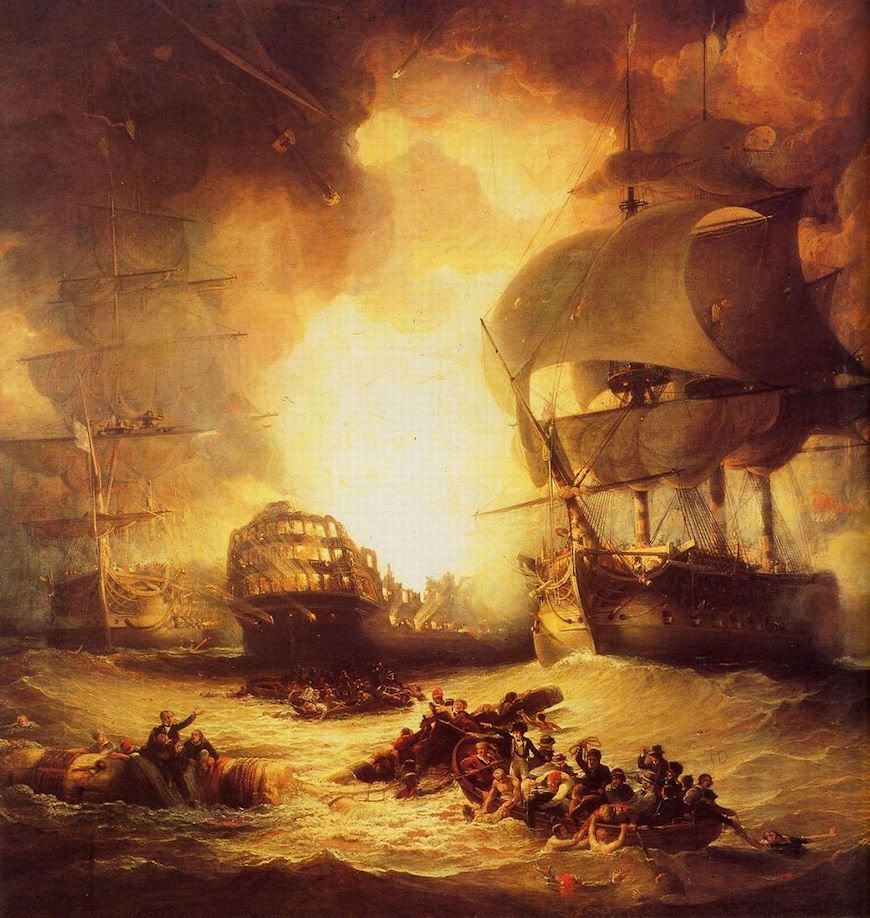
Following the disaster, Jean-Marie spent a year in freshly-conquered Cairo while the army and the Consul - crushing any local revolts and simply conscripting most of the surviving sailors of Aboukir - went on to adventure in Syria. He remained behind as part of the garrison and a volunteer bodyguard of the scientific expedition, meeting and befriending Nicolas-Jacques Conté, the engineer whose gigantic air balloons brought awe into the hearts of the Egyptians.
It was 1799, and the tides of war turned in distant Africa, prompting Napoleon to the decision of returning to France. For his handful of still-available ships, he required talented and experienced seamen. Jean-Marie got fortunate. In 41 days, he too could land at the city of Fréjus in Southern France. Before they slipped through the British ships blockading the coast, a cautious admiral suggested to Napoleon that they turn back and set sail to Corsica instead. The Consul simply replied: "No, this manoeuvre would lead us to England, and I want to get to France."
The courageous gamble proved successful.

It is a most ungrateful thing to lose battle after battle at sea in a war whose victories on dry land arrive as swiftly and in such numbers as the snowflakes of Scandinavia. The following years brought her desired gloire and grandeur to the French Empire, but hardly more than poverty to blockaded Marseille. The Consul became an Emperor, the Dubois became poor again. If nothing else, at least their pride remained, for the firstborn of the family was appointed the captain of a brand new ship of the line, the Achille.
They didn't have to starve, of course, Madame Castillion made sure to take care of her little defendants. Simultaneously though, the fair lady grew more and more distant, more and more burdened, still not talking about her reasons and their causes. When Jean-Marie was ordered to Toulon with all due urgency in early 1805, the increasingly worried Charlotte insisted to go along. Who could have been able to deny her?
When he introduced the majestic dame to the young crew of simple sailors as his "cousin", some of them grumbled in outrage, some of them eyed her with awe, but in the end, they all came to an agreement in the form of a "Yes, captain". Exploiting a gap in Nelson's blockade, the French fleet led by Admiral Pierre-Charles Villeneuve escaped from Toulon. Joining with their Spanish allies, they set off to the Caribbean. According to the plan, they would draw Nelson to the Americas, unite with the Atlantic fleet there, and return together to the English Channel, securing it long enough for the French invasion boats to make it through.
For all the discretion Charlotte exercised in feeding, the beautiful creature seen only at night haunting the deck qucikly entered the hearts - and fears - of these superstitious seafolk. One unseemly gesture, one impolite grin though, and the captain's "relative" had but to flash her eyes on the unfortunate soul, commanding immediate subordination and absolute respect. Time to time again, exactly at midnight they said, the men on the ships sailing beside them swore to have heard a soft voice singing from the Achille's direction. Many of them were quick to attribute this to a siren, conviniently explaining why not a single sea storm plagued their journey.
During that month and a half long voyage, vampire and her servant spent a lot of time together in the lady's luxurious cabin, passing time with endless discussions by candlelight. Charlotte told of eras long gone to Jean-Marie, but unlike the tales of a storyteller, her words were the recollection of first-hand experiences. The capitaine, if possible, became even more enthralled, swearing to protect her from whatever danger it was that compelled her to leave Marseille. He knew little of the scopes of power at play, and the reaction to such bold and foolish offers was rarely more than a sad smirk on the lips of Madame Castillion.
When they finally arrived at the Caribbean, anchoring at the island of Martinique, Admiral Villeneuve intended to remain in port until the fleet from Brest arrives to join them. Three weeks of waiting ensued, allowing sailor and soldier alike to finally find some relief and entertainment ashore. However, idleness soon led to discontent, and the governor of the island quietly suggested they pass their time the Napoleonic way. By next dawn, the so-called Diamond Rock, a small but tenacious British bastion in the sea, proudly sported the blue-white-red tricolour.
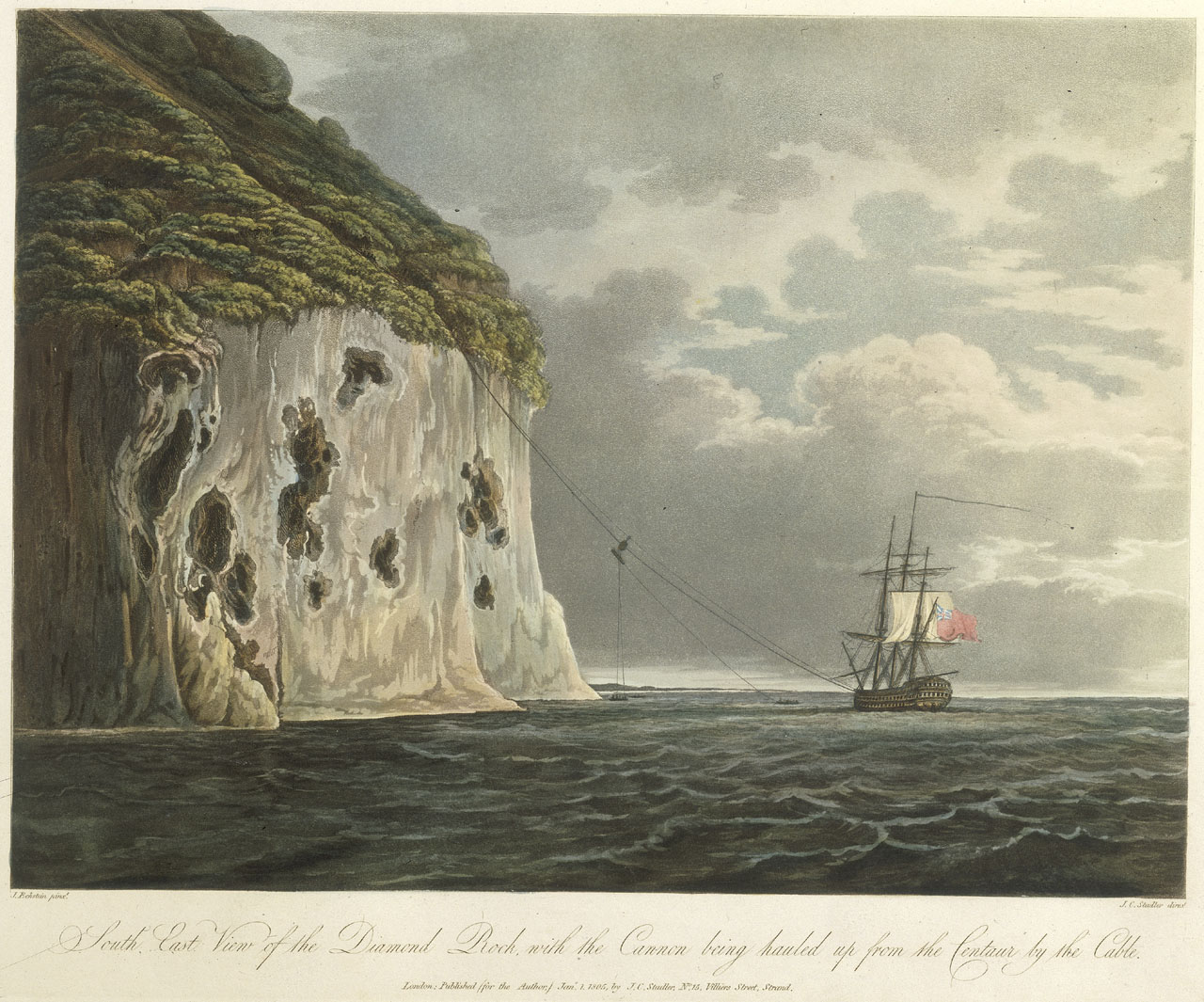
The message arriving afterwards nearly gave Villeneuve a heart-attack. Not only was the Admiral Ganteaume's fleet unable to escape the Brest blockade, his great nemesis, Admiral Nelson was here, after them. That was it. The entire armada bolted out to the north, turning east and rushing back to Europe. As General Honoré Charles Reille, one of the army officers attached to the fleet noted: "We have been masters of the sea for three weeks with a landing force of seven to eight thousand men and have not been able to attack a single island."
But Captain Jean-Marie Dubois didn't lose his head. Boosting the morale of his crew, he held speeches about the imminent union with the other half of the French fleet, ensuring the anxious men they would sweep the Channel clear of enemy ships and then, England's fate would be sealed under the boots of the landing Grande Armée. In the first week of the journey back from the Antilles, a heavy wooden beam got loose above the deck and fell down, threatening to crush the unfortunate sailor standing beneath it. Le Capitaine, consulting with his helmsman just a few metres away, stopped the beam with his bare hands, pushing it away with almost surreal ease. If possible, his popularity among his awestruck crew sprang even higher.
Another long, tense month of sailing followed, spent by the leadership in fear of Nelson's arrival, and by the crew in fear of the depletion of rum. Jean-Marie grew increasingly concerned about the Admiral's attitude. Heck, he thought, with the presence of their Spanish allies, they fielded even more ships than the British. He firmly believed that proper leadership, fiery enthusiasm and fanatical bravery could more than outmatch the greater experience of the enemy's seamen. Finally reaching the Iberian coast, they began sailing north, but the British Admirality already knew of their presence, sending a fleet of fifteen ships of the line under the command of Admiral Robert Calder. Only they stood now between Napoleon and England.
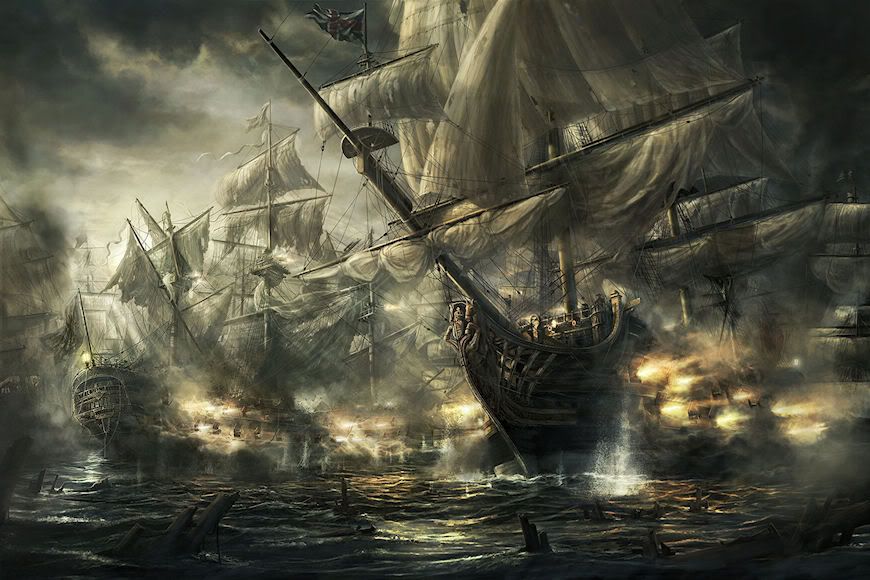
In the ensuing battle, not even a scratch was inflicted on the Achille, although they failed to force a decisive breakthrough. However, as if commanded by divine intervention, the fleet of Calder pulled back... and by next morning, the changing winds provided perfect conditions for a Franco-Spanish attack. The time finally arrived. The British were hesitating. Captain Jean-Marie Dubois stood tall and proud at the bow of his ship, hands meeting at his back, his eyes shining with the euphoria of triumph. Gloire. Grandeur.
Ambience
Which never came to pass. Villeneuve ordered a retreat.
At first, he didn't want to believe it. He stood silently on the deck like a backstabbed giant, staring at the flag signals and the ships of the line slowly passing by. Scipion. Formidable. Pluton. Neptune. Intrépide. Argonauta. España. Bucentaure.
As the flagship came into sight, the captain finally snapped awake from his daze to find himself surrounded by some of his puzzled crew. With ground teeth, he reluctantly gave the order to follow suit. He was a soldier. And an order... is an order. Even when his very future is drifting away with it.
Captain Jean-Marie Dubois spent that night locked away in the cabin of his guest. In his fury, he was ready to storm over to the Bucentaure any moment to punch the admiral for his foolishness, but those softly whispered words in that soothing, feminine embrace called for patience. How could he not oblige?
Their casualties were minimal, yet, Villeneuve decided to take the fleet to nearby Vigo for "repairs". They wasted weeks there, before finally setting out again towards Brest. The second day saw the appearance of a convoy on the northern horizon, dead ahead. Acquiring no further information and acting straight against the uncompromising order of the Emperor, Admiral Villeneuve ordered a rout again, fleeing to the ancient port of Cádiz near Gibraltar to the far south, forever diminishing Napoleon's hopes of invading England. At the time, none of them was aware that the ships coming towards them were not British, but the so-called "Invisible Squardron" of Admiral Allemand. The very French fleet sent to their aid...
Meanwhile, the Achille's captain started to isolate himself from the outside world for his own good. Compelling himself not to commit insubordination, he spent his free hours with his beloved Charlotte, who appeared strangely calm and indifferent about the situation at hand. It was as if the woman paid absolutely no mind to where they were and what happened around them, as long as she could hide in a ship's cabin from the looming shadows of dry land. Jean-Marie was confused, but she promised him that soon, revelations would be his. "Soon... everything will be alright."
It was time for a tactical war council that fateful autumn day, between the captains of the French Mediterranean Fleet and their Spanish allies. The situation grew more and more hopeless as Horatio Nelson finally located them, blockading the port now with the main strike force of the Royal Navy. While pondering their options in the map room, a messenger entered the majestic corridors of the grand palace, straight from Paris. His letter was short and to the point; the Emperor dismisses Admiral Pierre-Charles Villeneuve for his lack of ability, sending one Admiral François Rosily to replace him, who's already in Madrid and on his way to take command.
Villeneuve looked up, his gaze aflame with the fire of hurt pride. Before storming out of the room and Cádiz Palace itself, he uttered but a single sentence: "Gentlemen, prepare to sail."
A few hours later, Captain Jean-Marie Dubois stood at the dock's and his wit's end, idly eyeing the sailors hastily hauling cargo into the ships, and the soldiers rushing onboard. It was broad daylight, and he knew the lady of his heart would be deep in slumber as sure as the fate that awaited them if they attacked Nelson's blockade. Out of ideas and short on hope, he comitted himself to the greatest act of insolence ever since he met her.
When he woke the sleeping undead beauty, describing the likely consequences of the impending events and urging her to leave the ship while she can, he received nothing more than a loving embrace. "Go now, my brave captain, and do your duty. And when everything appears lost around you, return to me."
On the twenty-first of October, 1805., at exactly twelve o'clock, the two fleets arrived within firing range, and the flagship of the British fleet, the HMS Victory displayed her famous message: "England expects that every man will do his duty". The naval battle at the Cape of Trafalgar unfolded.
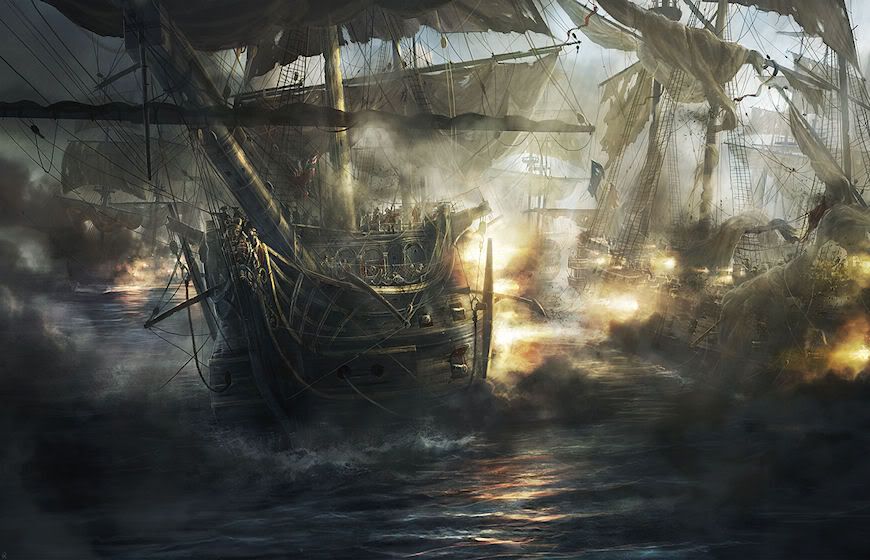
The Achille was tasked with defending the southern flank of the battle line, but it was not to be a conventional engagement. Contrary to Villeneuve's expectations, Nelson didn't form a line countering his ships, but divided them into two offensive columns thrusting into the Franco-Spanish line, himself spearheading the windward column against the Bucentaure aboard his flagship. Captain Dubois slowly shook his head as he watched the ensuing battle, secretly wishing they could switch admirals.
From his position, the most tactically sound goal was to move against the southern enemy column led by the HMS Royal Souvereign. The ship of the line commanded by the other British admiral wasted no time; it burst forward with so great a speed, it left the rest of the fleet falling behind and engaged the Spanish giant Santa Ana in a duel by the time Achille got there. The captain had two options before him.
Intervention, or changing course.
But Captain Dubois saluted the bravery of the enemy. At 12:20 hours, he issued command to turn, targeting the second warship, HMS Belleisle. Several allied ships joined him.
All hell was set loose. They sprouted fire and death from 74 cannons, receiving plenty in return when other British ships arrived. The captain stood tall and firm on the stern deck, shouting orders left and right, up and down. Soon enough, their disciplined barrages utterly ravaged the Belleisle; her main mast landed in the water with a loud splash, with barely a man left alive on her deck. But their tenacity bore its fruits in the appearance of HMS Dreadnought and Defiance, both recognizing the threat the Achille's well-coordinated cannon fire presented. In a pincer maneuver, they trapped the French ship between them, firing two broadsides and sending a boarding party to capture her.
Jean-Marie drew his sword.
The ensuing, desperate melee proved to be fateful. Despite the surrender of the nearby Spanish vessel, San Ildefonso, the Achille was determined to fight until the last man. "Vive l'Empereur!" - shouted our hero as he led his men into a charge against the ship's invaders. His attacks were imbued with a primal force that shredded bone and tore limbs, mutiliating enemy soldiers left and right. None could stand against Le Capitaine. Soon, the British were running - and jumping - for their lives. "Back to the cannons! Full broadside on the starboard!" - came the next command, prompting his desperate, fanatical sailors to execute it with deadly efficiency, destroying both the main- and the fore-mast of the Dreadnought, wreaking chaos and havoc on her deck. His men echoed Dubois's words in ecstasic unity: "Long live the Emperor! Long live the Emperor!"
The next moment brought a thundering roar of cannons, the devastating broadside of a third enemy ship from behind, HMS Prince. Water began flooding the hull, and a shout was heard: "Fire on the deck!"
At 16:00 hours, the fate of the Achille was sealed.
The captain himself simply walked to the ravaged main-mast, took down his hat, and uttered the following words: "It has been a great honour serving alongside such brave men. The battle is lost, but not the war. Men... abandon ship."
With that said, Ship of the Line Captain Jean-Marie Dubois disappeared, with his head lowered, in the staircase leading to the ship's insides, never to be seen again by his crew. His name is now inscribed on the southern pillar of the Arc de Triomphe in Paris, underlined, like the names of all those who died a heroic death in battle.
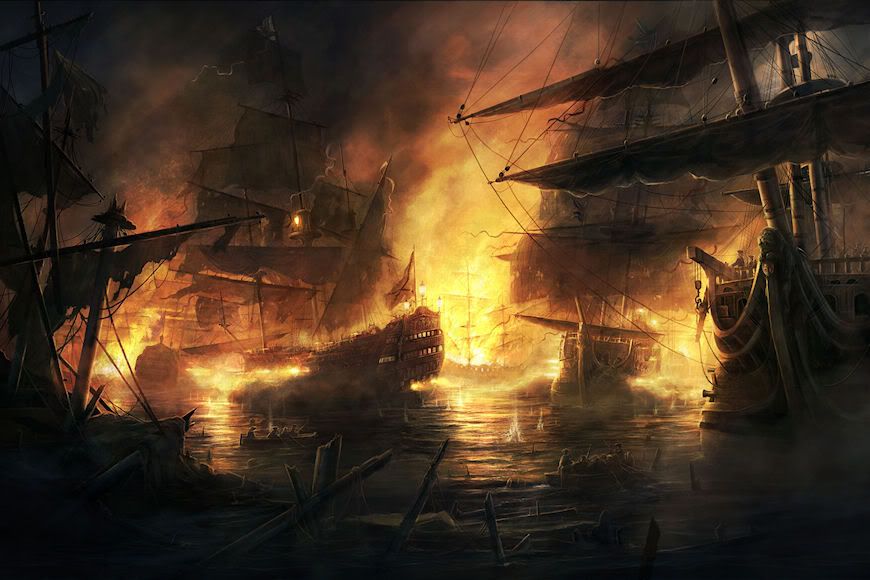
Ambience
A whole different world awaited him beneath. Despite the ship burning and sinking, this little corridor emitted the same strange, mystical aura as ever before in this magical half a year. Led on a seductive, dark trail, Le Capitaine entered his guest's cabin.
Charlotte was awake, spending the whole battle conscious, despite the broad daylight outside. She turned away from her jewelry box with a smile, eyeing the battle-worn captain, telling him how proud she was. Telling him that the time has come for them to finally be together for the first and for the last time. Their lips united... and within moments, Jean-Marie would submerge under the waves of ectasy.
He didn't retain a whole lot of memories from those couple of days, hours, minutes... seconds? His consciousness gradually faded away in the greatest rush of pleasure he ever felt. The last thing his mind registered was a powerful explosion in the stern, as the ammunition stockpiles ignited, tearing his ship in half and sinking her into her watery grave. Watery grave. Water. Melodically whispering water, slowly creeping in...
The awakening was surreal.
He was still in the cabin, now underwater, with the door open. So this is death - he thought, for undoubtedly, dead he was, needing no air to breathe, but when he cast his gaze down, he failed to find his body.
Because he was still in it.
It took a few moments to put the pieces together in his mind. Charlotte... so this is how she saved him. The next impression, the next urge, maddening, overwhelming hunger, was immediately overshadowed by the thought of his beloved woman. She wasn't there. She was gone. She saved herself; he hoped. It was time for him to do the same.
Days of terror awaited him. Climbing out of the sunken wreck of his ship, hungering for blood but never finding any, he began heading towards the supposed direction of the coast. It was much harder to swim without air in his body, but when it began to dawn, he had to descend to the seafloor into a feverish slumber over and over again. A great storm erupted up above, but the life-, soul- and love-lost captain continued on ever so desperately, before finally reaching the shore... at Gibraltar.

Difficult times followed for Captain Dubois. While relentlessly searching for any sign of Charlotte Castillion, he was forced to get used to his new and grotesque existence. He needed to face his own transformation into a godless, blood-drinking monster, a terror of the night. Accepting this was far more difficult than saying "yes" to that pair of seductive eyes.
Eventually, he got over it. With time, he learned to exercise temperance, he learned to lick the wounds after feeding, he learned to avoid mirrors and he learned to bend the shadows around him to his will. Even though he could never see the sun again, and soon enough, he also realized he was searching for his lady in vain, he still had a purpose to fight for.
In the spring of 1806 in the town of Rennes, ex-Admiral Pierre-Charles Villeneuve, freshly returned from English captivity, was found dead in his room in the Hotel de la Patrie, with seven precise, cut wounds on his body. Despite the fact one of the service girls reported to have seen a menacing, shadowy figure that night, the accident appeared in next morning's newspapers as an unfortunate suicide, dismissing any, completely silly and unfounded allegations to the contrary...
In 1807, Jean-Marie Dubois finally embarked on recruiting a new crew. Returning to Cádiz, he found the sailors from the four ships surviving Trafalgar still lingering aimlessly in town, lacking a purpose and kept landbound by the enduring British blockade. Donning a disguise, he sought out the finest among them one by one, and with the addition of a good handful of Spanish seamen, he gathered a select crew from the most able men available. Feeding his blood to each of them, he ensured their absolute, unquestioning loyalty - and silence - early on.
The following year saw the transition of Spain from ally to enemy practically overnight, forcing the captain to act very quickly. He and his crew fought their way through the rioting town to slip out of Cádiz on board of the largest French ship, leaving the docks burning behind them. The single English vessel sent to intercept them was found the next morning, drifting peacefully without her crew in the light eastern wind...
On the orders of the captain, the 80-cannon ship of the line was fully repaired, reinforced, her hull dyed pitch-black, and a new name inscribed on her sides with silver paint; Charlotte. After three long years, Jean-Marie Dubois could finally return to where he truly felt at home.
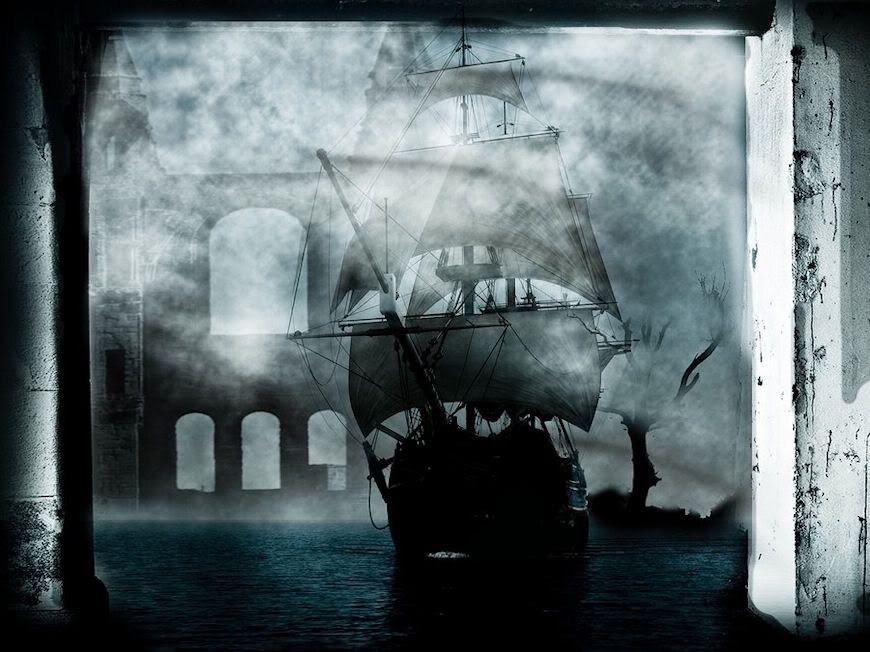
Like a ghost ship of dreadful sailor tales, the Charlotte sailed from port to port, attacking exclusively at night, mercilessly preying on Portugese, Spanish and especially British ships; convoys, troop transports, merchant vessels - anything without heavy escort became a potential victim to this nocturnal menace. Her crew worked in unflinching discipline and miraculous harmony, fueled by the blood of their captain consumed at mysterious and magnificent midnight ceremonies, lending them great strength and eternal youth. The same blood could save and heal the most critically-wounded in moments, and when replacements were needed, the most talented, able and brave prisoners were granted the opportunity to become crew members themselves; instead of food.
He truly was king among the kine, and it wasn't long before the unfortunate mortals he preyed upon dubbed him "The Shadow Prince", completely oblivious to the source of his invincibility. As far as he knew, he was unique in his undead existence, never having met a vampire other than his Sire.
Even though, they visited many a sea and many a land. Sailing through the route he so desired to in life, Dubois wreaked horrible havoc on the British convoys heading to Iberia through La Manche. After capturing the largest-yet enemy ship, he ordered it packed richly with loot and treasures, her name repainted Cadeau Pour L'Empereur - "Gift For The Emperor", and ran aground thirty miles from Brest.
He returned to Egypt to raid twelve Ottoman ports, slipped through the Dardanelles and back after terrorizing the Russian Crimean Fleet, sailed around Africa, pirating on the trade routes to India and inflicted shameful defeats upon the Scandinavian allies of England.
He reveled in his newfound power, his liberation from so many years of restrictions and servitude under the incompatible and the weak. Now, at last, he could unleash his full talents for the glory of France! What "France", the French Empire! And even more importantly; he could finally avenge Charlotte.
But one man cannot stand against the whole world. It was true about Dubois as much as it was true about Bonaparte. Despite the genius, despite the ability, despite the heroic enthusiasm of the masses, the war came to an end, and it came with a French defeat. And although miracles do exist - as Napoleon returned from his exile to rally his nation once more under his banner -, all things must eventually come to an end.
The night the news of final defeat reached the Charlotte, her captain simply froze where he stood, on the stern deck, gazing into the distant blackness like a marble statue. So many years of struggle, of sacrifice, his life and soul given, all in vain. He reflected on his existence, meditating on the long-term future, perhaps for the first time. The time finally came for him to look towards mysteries deeper than mortal affairs, to find out what he truly is and where his place stands in the world. Only the first rays of the sun dispelled his melancholic trance; surrounded by the desperate gazes of his men, the slighty-fuming captain finally departed to his cabin.
At any rate, the die was cast. They were corsairs, demons of the night preying almost indiscriminately on the ocean-faring peoples of the Seven Seas. Thus, they continued to do what was their essence to do, but their captain, the "Shadow Prince" turned increasingly inwards, beginning to study the occult tomes of plundered libraries, bringing "wisemen" aboard his ship, doing everything and anything to find answers to the secrets of his existence. To no avail.
Ambience
When the grand day finally came in the winter of 1829 in Genoa, he thought he could make up for all those lonely years at last. That he could truly be initiated into his dark new life, that he could finally learn what befalls him and why. But it was not to be. When he was invited to their grand New Year's Eve ball, when the grand brocade carpets fell, revealing the monumental Renaissance hall in all its glory, the night took on a catastrophic turn.
"He has no reflection!"
Came the fearful shout, and suddenly, his fellow monsters looked at him as if the Devil himself appeared in their midst. They immediately attacked him en masse, and Le Capitaine barely made it back to his ship alive, cutting a bloody path through his own kind.
They were all seen in the mirrors, but none of them was willing to stand down and explain anything. Prisoners of their paranoid fear and hatred, they drove him away like they did Charlotte Castillion in the previous century. Was he truly a bastard, then, an abominable outcast among both mortals and immortals? Such were the thoughts trailing through the mind of Jean-Marie Dubois as his ship left Europe behind and set sail for the New World. The place where the exiled could find a new home. And maybe, he hoped, the answers to questions long unanswered.
There, they could truly unleash their fury. The threat of piracy fell into the dark depths of history a good century ago in the minds of the locals. All the greater was their shock and horror over the appearance of the Charlotte. Here, they were yet-unheard of, but the mainly African denizens of the Caribbean were quick to weave dreadful legends and fear-ridden superstitions around this black wolf from the European coasts. The "Shadow Prince" now had a good use for his knowledge and personal experience of the Antilles acquired in life.

But times were changing. Steam ships appeared, armoured sea giants of steel, and brand new weapons they could no longer match. For nineteen years between 1829 and 1848 would they sail these wild, savage, distant waters, reaching as far as the Pacific and Australia. Time flew fast for the captain as he hoarded and amassed wonderous riches and an entire library of books; he learned to speak several languages, dug himself deep into occult mysteries, but with little effect. Like so many times throughout his life, knowledge would come to him through personal experience.
They were docking in a tiny Chilean fishing village near Cape Horn that cold, damp night in 1847. After being sent ashore for supplies, his men returned with the story of having seen a strange creature hopping around and hiding among the crates of the docks. The "Shadow Prince" decided to take this matter into his own hands. It was then that he met the Gangrel Pedro Saldívar.
Even though he was a savage, illiterate hermit barely able to communicate by speech, Dubois invited him on board of his ship, sharing with him the four-decade glory of the Charlotte. Unlike the vampires of Europe, Saldívar did not find him an abomination, if anything, he was genuinely surprised at the treatment and hospitality only equals would deserve. He told him he had more than enough of "civilization", he's a child of the wilderness now, but if Dubois is so hell-bent on finding others like him, he should head towards Mexico.
Which he did. On the voyage, they shared many a tale, had a taste of each other's disciplines, and fought ships far larger than theirs. The age of piracy was over, but surprise is a weapon that never grows obsolete. Once they made it on board... only God could hear the screams of their enemies.
The Kindred was hairy and wrinkled, with a bent back and stinking like Roquefort cheese, but he personalized what Jean-Marie has been searching for in the past long decades. A brother in darkness. They said their farewells at the Amazon delta before our hero set sail to the northwest. He finally came to a conclusion; a conclusion Napoleon was unable to reach.
Quit while you're ahead.
Ambience
On February the 13th, 1848, the Imperial French ship of the line Charlotte glided into Veracruz harbour as silently as a specter. Towering high above them on the stern deck, Le Capitaine held one final, passionate speech to his gathered crew, faithful mortals who served him for so many years like a fanatical, sea-faring Imperial Guard. Sons of numerous peoples and numerous cultures, united in their service in blood, personalizing what the French Navy was born for. They avenged the lost war on "Great" Britain, and pillaged the whole world while having hell of a good time. But their time was over. They couldn't let the new times, this modern mundanity defeat them and demolish the myth of their invincibility. Instead, they would voluntarily enter the shadows of history.
His crew hence dispersed towards the four corners of the world, Dubois hid his ship inside a desolate sea cavern and, taking a handful of his most trusted men, set out for Mexico City. The first contact with the local Kindred was impulsive and violent, but he quickly overwhelmed his attackers. After he finally arrived in the capital of Mexico, his eccentric and powerful personality swiftly became famous among the local Sabbat. For all his charisma, however, he would have quickly submerged without allies and benefactors in the New World center of this bloodthirsty sect. The sect to which he knew no alternative.
Jacinto Elorza de Navarro y Vargas was a mediocre power factor in Mexico back then. A conquistador noble in life and a Sabbat Archbishop in death, he was one of the more ruthless and ambitious Lasombra in town; he did, however, possess one trait few of his rivals did. Patience. Presenting himself as the utterly loyal servant seeking to execute the every wish of the various Prisci, Cardinals and the Regent, he quickly recognized the exploitable potential in the lost sea-sheep. Soon enough, the two men struck an alliance.
Jean-Marie Dubois learned the history of the undead, the hierarchy and various workings of their society. He was introduced to the enemy, the great leviathan, the Camarilla, foot soldiers and cannon fodder to the Antediluvians; ages-old vampires who made the ancien régime look like a benevolent charity group in comparison. He came across "independents" too, and their less than glorious allies, the Tzimisce, bloodthirsty Eastern European rejects good only for the meat grinder. He became more and more entangled in the spider's web, and from this web, there was no escape. Nor did he look, or wish for one; the growth of his power and influence was satisfying enough.
Though Dubois became a Templar of the Sabbat, Navarro didn't want to let his secret weapon be known. Wherever he went, he did so under a new alias, a new identity, encasing himself in enigmatic shadows as he took - or guarded - life in the name of the sect. He had no doubt his fate lies with the Sword of Caine; he remembered his treatment by the Camarilla all too well, and if Charlotte was still alive, he was certain he'd find her through the Sabbat as well.
Years passed by, and the "Shadow Prince" turned away from the world of mortals almost completely. Though he still aided the new and significantly less glorious Second French Empire in the conquest of Mexico in 1862, his gaze finally settled on the ever-increasing internal tension of the Sabbat. The Camarilla made huge inroads in the USA while Lasombra-dominated Mexico and Tzimisce Canada put the blame for the setbacks on each other. Soon, in a grotesque mirror of mortal events, the fires of civil war started raging between North and South.
As far as Templar Dubois was concerned, he eradicated those sick, bestial fiends with the greatest pleasure. The war came to its greatest intensity in the so-called Wild West, in this dry, sun-baked, shelterless land of deserts and ghost towns. There, they made their fortune: Navarro eventually became the Archbishop of Dallas, with Dubois as his autocratic right hand man. The civil war formally ended with the Code of Milan, signed in 1933, which decreed that no member of the Sabbat may take the unlife of another. The Sword of Caine could finally turn against the Camarilla again.
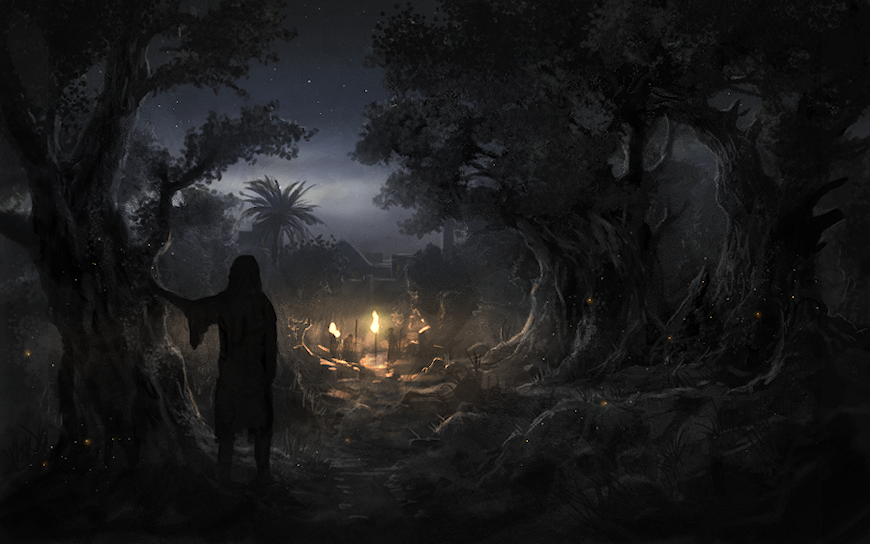
In Texas, the two great wars left Kindred little-affected. If anything, their stars began to rise with the country around them. For the first time in history, their influence and power started to become greater than that of their European peers all too busy hiding from bombs and burning to ash. The New World became the main theatre of the modern nights. The stage for the final struggle.
In 1959, Jacinto Elorza Navarro became a Priscus of the Sabbat. Keeping his various contacts and business interests, he was finally freed from the entanglements of leading a city. The two Lasombra set out yet again, this time to boss Archbishops around and whisper silkily-woven words into the ears of Cardinals. It was a great relief for Dubois, who slowly, but surely familiarized himself with aerial travel and the various aspects of modern technology. Efficiency above everything, of course. But despite all these changes, despite so much time flying by, he never forgot his past, and the future he was aiming for.
Less than a year after their departure, Dallas was overrun by the Camarilla.
After one hundred and fifty years, in 1971, his feet finally touched French soil again. It was a strange, but definitely intoxicating feeling, especially given his task of "persuading" some humanist poseurs of Clan Toreador to talk. Before executing them. From then on, he became actively involved in European affairs again, supporting his clan's northward pursuits and aspirations from Spain. Such was his enthusiasm that Cardinal Ambrosio Luis Monçada himself spoke highly of his results before the Les Amis Noirs, the organization which he soon joined himself.
Ambience
He strode along the "new" boulevards, visited the Eiffel Tower, appeared with a knowing smirk before the Arc de Triomphe and saluted the sarcophagus of his late emperor in the Invalides Palace. Pathetic Camarilla vampires no longer presented an obstacle to him; how could they have, when he ruled the very night and darkness that gave home to all of them, even those who refused to acknowledge it? For thirty years, he remained in the Old World as a faceless, nameless fist of the Sabbat, ready to strike down on all who opposed the sect, before being recalled by his old ally, now submerged in high politics.
Navarro required his services for his newest project of epic proportions; the retaking of the American capital lost in the disastrous events at the turn of the millenium. With his increased rank, he was already able to amass an impressive force to this end: Bishops and Archbishops, several dozen elite war packs, assassins of the Black Hand, Tzimisce flesh fiends in all sizes and shapes, antitribu traitors and scouts on the peripheries, Lupines, almost unprecedentedly in history, and creatures whose existence the average little Camarilla mouse wouldn't even dream of in his worst nightmare. But he needed one final touch. A master spy to give a direction to this war machine. In the Templar, he was presented with just the man he needed.
Through their long years of cooperation, neither Navarro, nor Dubois really bothered to bore the other with the petty and irrelevant details of their mortal and early undead lives. The Spanish Priscus knew enough, however, to realize his Templar has been searching rather intensively for any sign of his Sire in his early years, and that all he had in this search was but a single name.
"Charlotte Castillion".
The year was 2004, and at the beginning of his crusade, the reverend Lasombra was browsing through the various files and documents of his "unfortunate" predecessor, measuring the political situation of Washington's Kindred. This is when he came across the name forgotten so many years ago. The dame's clan status being marked as "Unknown" was conspicuous enough indeed, but her relatively powerless and irrelevant social position was somewhat contradicting the possibility of her being the sixth generation Sire of Dubois. Still... the possibility was there. If you're a daughter of darkness hiding from the Sword of Caine, it certainly pays off not to draw attention to yourself. Navarro immediately sent one of his Nosferatu scouts to take some photographs. The result was two empty shots and a third containing a blurred blot of shadows. The lips of the Priscus curved into a pleased grin.
Jean-Marie Dubois was sitting on the terrace of a café near the old family house in Marseille when he received the message. At first, he didn't quite know what to do. Nostalgia already hit him like a steam locomotive in recent years, and now, the skeletal fingers of the past took a cruel grip around what remained of his heart.
So she survived. So he could finally meet her again.
But he was an inseparable part of the Sabbat now, tied to the sect by far too many threads for them to have any common future. With contradicting emotions inside, he travelled back to the States and accepted the role offered to him by his friend. That of the master spy.
They planned everything in perfect detail. With an insolently daring move, they decided the best disguise would be using no disguise at all. After a century and a half of incognito, the Templar would enter the city as his real self; the long-lost Childe of Madame Castillion, who finally found her. He won't even need to play a role. He would speak the absolute, authentical and trackable truth about his life up to the end of his corsair years, which in the story would lead to the long and sorrowful hiding from the Sabbat. An adventurous, but somber exile, interwoven with the sea as in the case of so many an antitribu.
They kept an eye on every happening in Washington, timing his arrival right after the coming of several other Kindred, reducing suspicion and the crossfire of paranoid questions. The first he sought out was his Sire, on the exact day of the two hundred years anniversary of Trafalgar.

Ambience
Two hundred years.
Two hundred long, bitter, lonely years. Though keeping her temperance and veiling her surprise, Charlotte did not deny her joy over their reunion. Why would she have doubted the tale of the man who kept tearing her conscience for so many years? At the next Elysium, she introduced her Childe in his full Napoleonic uniform, vouching for him before the Prince. The Tremere's right hand man smiled back upon him with an all too familiar face. A face igniting an ancient hatred in the Lasombra's heart. A face... whose presence here cannot be accidental.
François Louviere. The murderer of his father. By God...
Naturally, the Seneschal and his lackeys began their investigation into the sincerity of this new Kindred, as is proper by the draconic laws of revolutionary Camarilla Washington. Data and documents kept coming to light. Only the outlines of his mortal life were accessible, mostly in French archives, but they were matching. Contemporary portraits proved that he was indeed the captain of the Achille, and the folklore and local myths of Western Europe and the Caribbean yet again reinforced his colourful tale. Everything was falling into place, the need was great, the blood of Jean-Marie potent and his Sire an old and trusted member of the Establishment. With a commotion and pomp rarely given to newcomers, the Washington Camarilla officially embraced him on a banquette reminiscent of XVIIIth Century France.
Far slower than before, but the years kept passing. Like most antitribu Lasombra, Monseigneur Dubois quickly absorbed local laws and customs, displaying absolute loyalty towards them. Selection in the population drastically intensified for many reasons during the "blood plague" of 2006; much like terror, discontent and fear. Time to time again, it became necessary to drain bad blood, in which the French gentleman, alongside removing any traces left, proved most useful. By the end of 2007, he is elevated into the position of Scourge, all the while relentlessly feeding informations to the Sabbat. Navarro, being the sly fox he is, rarely uses the news immediately, preferring to store the information and wait, continously building upon them, gradually planning a grand, master move. For this reason, despite the recent, frustrating small victories of the enemy, the suspicion regarding Sabbat spies remains on roughly the same level in Camarilla circles.
High in the sky.
The year is 2011 now. A luxurious black limousine halts in the outskirts of Washington, at Madison Heights. The brilliant light of the full moon illuminates the two figures emerging from the car and walking towards the edge of the great white cliffs overlooking the sea, wearing clothes from a long-gone era. There is a narrow bay down there separating the ocean from a small, dark, but strangely romantic little sea cave. Standing in a blue-white-red uniform with an oh-so peculiar hat on his head, the man hands an item to the woman dressed in a white gown so brilliantly-made, it would turn Marie Antoinette green with envy. The gold-alloyed, archaic naval telescope serves but one purpose; namely the spectacular sight approaching from the open sea that would surely take the lady's breath - if she still breathed. A matt black battle ship from a better age gliding through the bay towards the cave like a menacing, but majestic ghost. As the man and the woman lean their heads together and enter a loving embrace, the moonlight shines upon the name painted on the ship's side with silvery dye.
'Charlotte'.

_________________
 |
|